
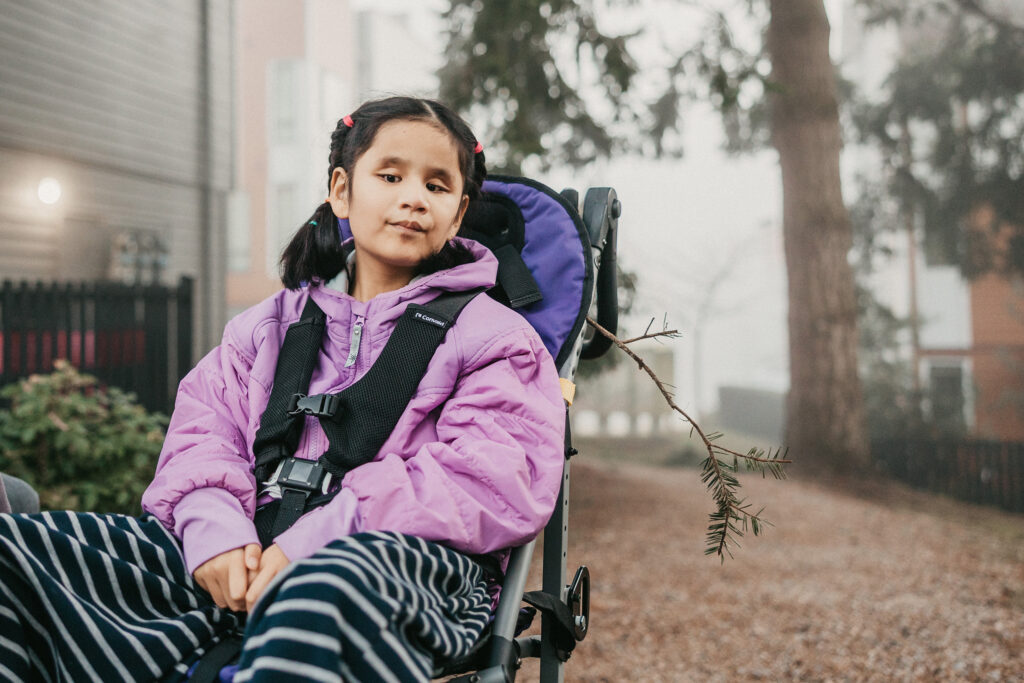
The right support helps children be included and empowered in everyday life
Echo and Chance had to start over when they moved from Winnipeg to Surrey with their young family.
Their savings were almost gone. They had the added pressures of finding a new support system for their eldest daughter, Hanaa, who has developmental delays and Leber congenital amaurosis, a rare condition that causes severe vision loss from infancy.
Hanaa has significant care needs and frequent appointments at BC Children’s Hospital and a local child development centre. Transferring Hanaa and lifting her heavy wheelchair in and out of the car was a constant physical strain for her parents.
But custom, lighter wheelchair alternatives cost thousands of dollars, requiring many families like Hanaa’s to source other funding options before they can purchase one.
Hanaa’s story is just one example of the juggling act that parents of kids with developmental disabilities undergo as they try to put the right supports in place.
Every child’s development is different
Developmental disabilities reflect differences in how brains and bodies develop, affecting how a child learns, thinks, communicates, moves, or manages everyday activities. Often, they are lifelong conditions.
One BC study using health system data estimated that about one in 40 children in British Columbia have developmental disabilities. Diagnoses within that group include autism, Down syndrome, fetal alcohol spectrum disorder, and other developmental disabilities.
Developmental disabilities vary greatly, as do the supports a child and family may need. Some children may need help building communication skills. Others may benefit from support with emotional regulation, motor development, or learning routines that help them participate more fully at school and in everyday life.
Differences in development and having different support needs are a normal part of life; normalizing these differences can help reduce the stigma often associated with developmental disabilities. For more on this, read our blog post on neurodiversity.
Why early support matters
The Government of British Columbia’s Children and Youth with Support Needs framework emphasizes that support should begin as early as possible when developmental differences are identified. Early intervention helps strengthen emerging skills, reduce barriers over time, and create better opportunities for kids to participate and experience more independence later in life.
Needs also evolve. A child who begins with speech therapy may later require tutoring, counselling, mobility equipment, or other services that help them navigate a new life season.
For many families, access remains limited. Despite many improvements over the years thanks to persistent disability rights advocacy, public funding doesn’t cover the full cost of care, and waitlists for assessments and services can stretch for months or even years.
Improving inclusion by closing resource gaps
Developmental Disabilities Month is an opportunity to recognize not only the realities families face, but also to celebrate the extraordinary progress children make when they are given the tools they need.
Closing gaps in care mean families no longer feel stressed and alone. Hanaa is currently in second grade and loving school. She’s well supported at school and loves greeting her friends every morning.
With funding from Variety BC, Chance and Echo could afford a lightweight stroller that has made an immediate difference in their day-to-day life.
“It’s allowed Hanaa to join more family outings and feel more comfortable and included,” Echo says. “It’s always in our car now, ready to go.”
This one piece of equipment may seem simple, but it’s an example of one thing made easier—making life more accessible for Hanaa and her family. This kind of tangible support sets kids up for success. With the right resources and tools, every child can build confidence, develop independence, and participate more fully in the world around them.
Happy Developmental Disabilities Month!