
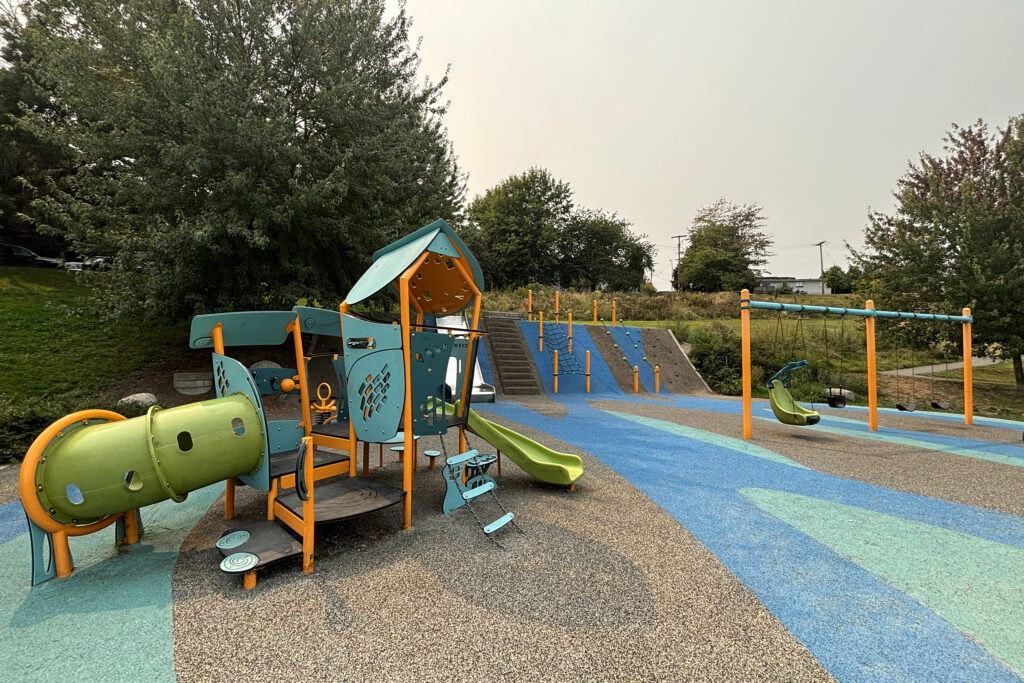
Why play matters
The more we learn about childhood development, the more we realize just how much children learn through play. When kids climb a ladder, build a stick tower, or take turns on a swing, they’re strengthening their muscles and motor skills, making decisions, coming up with ideas, and learning to cooperate with others.
Physical movement and play also reduce the risk of anxiety, depression, and stress, as well as additional health conditions. These are just some of the reasons why it’s essential that all children can access play areas.
Yet 38% of Canadian children with a disability almost never get physical exercise after school, compared to only 10% of their peers, according to a study by Physical and Health Education Canada.
Improving playground accessibility is a big part of removing these barriers so children with disabilities can play alongside their friends.
Designing playgrounds for every child
Universal design means creating environments that work for the widest possible range of people from the start. Rather than designing for an abstract “average” child, universally designed playgrounds consider real scenarios and individual experiences, such as different physical, sensory, cognitive, and communication needs. The result is often a better experience for everyone.
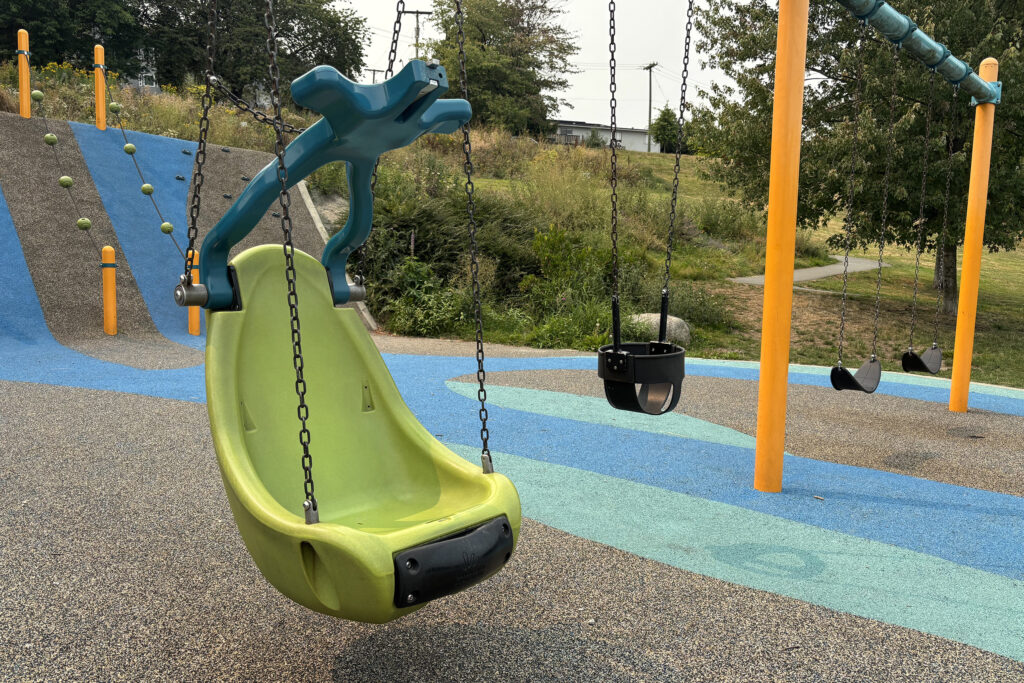
The goal is to integrate each element into a cohesive design, giving all children access to the same play experiences without isolating the “accessible” options.
So what makes playgrounds accessible? Here are some useful principles to keep in mind.
Diverse play opportunities
The most successful playgrounds offer choice. They provide different ways to encourage movement, imagination, social interaction, and exploration, allowing every child to participate meaningfully.
Some kids love to climb, swing, and run. Others are drawn to music, imaginative play, building activities, or sensory exploration. Accessible playgrounds include a variety of play experiences that support physical, cognitive, social, and sensory development. This gives children more opportunities to engage in ways that match their abilities and interests.
Ranges of challenge and risk
Playgrounds should be safe, but still stimulating and unstructured enough that kids can assess for themselves which risks they’re ready for. Children develop confidence by trying new things, problem-solving, and testing their abilities.
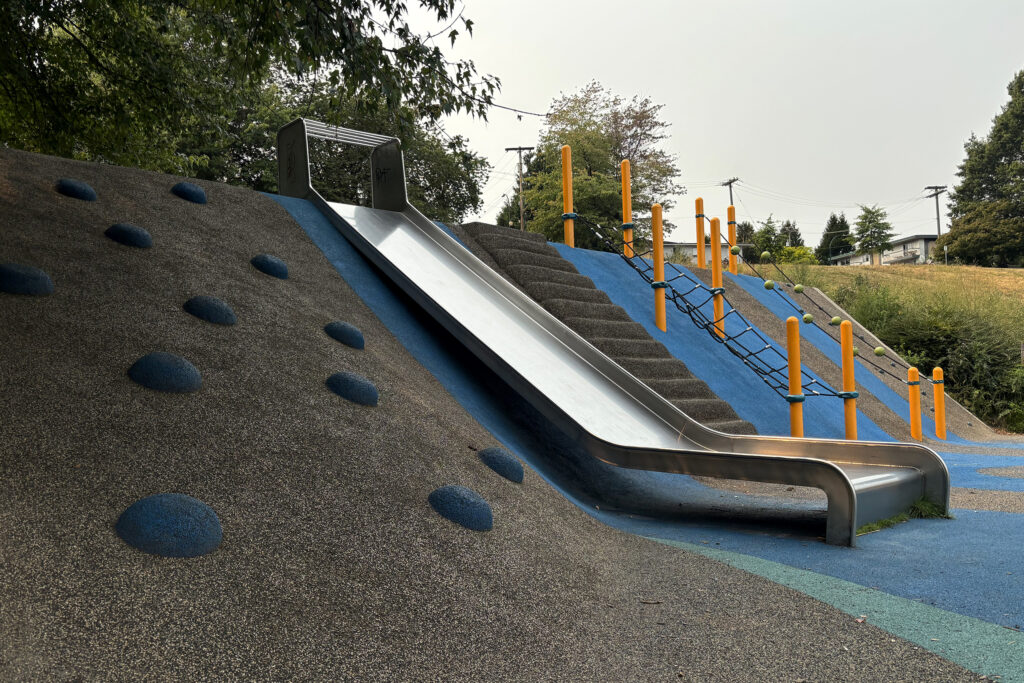
Accessible playgrounds provide different levels of challenge so children can choose activities that feel right for them. For instance, this could mean gentle slopes and simple climbing features alongside more complex equipment for children seeking a greater challenge.
Accessibility for different mobility needs
Children and caregivers with different ranges of mobility should be able to navigate the playground with ease. This means paths need to be wide enough for wheelchairs to turn around, and playground structures should have ramps and different options for transferring onto the higher elements. Other examples include supportive swing seats and placing play panels at different heights so they can be accessed either sitting or standing.
Loose materials such as sand or wood chips are difficult for wheelchairs, walkers, mobility devices, and strollers. Poured-in-place rubber, rubber tiles, or other firm, stable surfaces are much better for mobility devices. Plus, these springy surfaces have good grip and are soft to fall on, making them a great choice for all children.
Making space for different sensory experiences
Some children actively seek different textures, sounds and movements, such as musical instruments, water features, rockers or spinners. Others get over-stimulated and need breaks from busy environments. A good balance of active spaces and quiet hidey-holes give kids more choices for high stimulation or calming places to regulate.
Using colour, contrast and accessible signage
High-contrast colours can help children with low vision identify pathways, equipment, and transitions between spaces. When choosing colours, avoid combinations that individuals with colour blindness cannot distinguish between (most commonly red and green or green and blue combinations).
Signs with tactile elements, braille, and universally recognized symbols make navigation easier for those with visual or hearing impairments to confidently find their way around.
Creating safe, comfortable environments
Clearly defined boundaries means kids can still explore independently without the risk of running onto a street or getting lost. Using a mix of landscaping, fencing and other design features creates a secure enclosure that still feels open and welcoming.
Having plenty of shady areas is an important part of any playground. And having lots of places to sit makes the space more hospitable, especially for parents or grandparents with mobility issues or health conditions.
Playgrounds where every child belongs
At their best, accessible playgrounds go beyond creating special access for some children. When all kids can play together, they build friendships, develop empathy for diverse experiences, and strengthen their sense of belonging. Families benefit too, with spaces that are easier to navigate, more welcoming, and designed with a wider range of needs in mind.